
Ever Wonder About Propane? Here Are Some Answers
Propane is an efficient and versatile fuel. Understanding how it is stored and delivered to your appliances makes the whole system much less mysterious.

What propane actually is
Propane belongs to the family of hydrocarbons — it is composed of hydrogen and carbon. It is a byproduct of crude oil, or it is extracted along with natural gas. An odor is added to propane so it can be distinguished from other gases, because propane itself has no smell.
It is pressurized into a liquid for storage and transport, which is why a tank holds so much energy in a small space. From there it can be used as a liquid for engine fuel, or as a vapour to heat your home, cook your food or heat your water.

Propane tanks
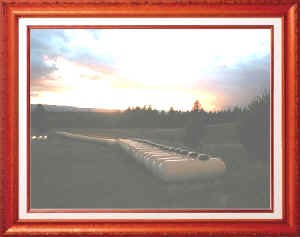
All propane tanks are manufactured to safely contain liquid propane. Tanks are filled to within 20 percent of their maximum capacity, which leaves room for vaporisation and expansion as temperature changes.
Every propane-fuelled appliance burns propane vapour, not liquid. That is why the tank always keeps a vapour space above the liquid.
- Percentage gaugeShows how full the tank is — the number to have ready when you call
- Fill valveWhere the delivery driver connects the hose
- Shut-off valveLets you stop the flow of propane at the tank
- Pressure relief valveSafely relieves excess pressure if the tank gets too warm
These are usually located under the hood of the tank. Tanks supplied by Polson Propane are leased from us and maintained by us — that is part of what your account covers. Customers who own their own tank qualify for discounted pricing.
Propane regulators
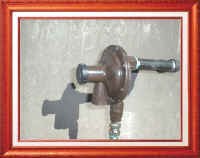
Regulators are mandatory equipment on every propane installation. Their job is to reduce tank pressure down to the operating pressure your appliances were designed for. Two regulators are used on a typical system, which gives the best efficiency:
First stage — at the tank
Located on the tank, the first stage regulator reduces tank pressure to roughly ten pounds per square inch.
Second stage — at the house
Located at the house, the second stage regulator releases propane at the appliance pressure your equipment needs.
Worth remembering: regulators should be replaced every fifteen years or sooner if they become defective. A failing regulator is one of the most common causes of appliance trouble, and it is exactly the sort of thing a GASCheck® inspection picks up.
For more on propane safety, see our page on the Gas Appliance System Check: GASCheck®. And if you ever smell gas, follow the steps on the propane safety page.
Ready for propane service you can count on?
Call the plant, place an order online, or stop by on Highway 93 just north of Rocky Point Road. We serve Polson, Bigfork, Lakeside, Ronan, Pablo and the southern Flathead Valley.